
Chavin de Huantar: Immersion in the Mystical Heart of the Central Andes
If you are planning a trip to northern Peru, you have probably already added the city of Huaraz and its turquoise lagoons to your itinerary. But did you know that this region is also home to one of the most important spiritual and cultural centers of pre-Columbian America? Long before the rise of the Incas, the Chavin culture laid the foundations of Andean civilizations.
Today, we take you on a journey to discover the archaeological complex of Chavin de Huantar, designated a UNESCO World Heritage Site in 1985. Get ready for a fascinating trip back in time, through underground galleries, feline deities, and feats of acoustic engineering.
A Touch of History: Who Were the Chavin?
The Chavin culture developed mainly between 1500 BC and 300 BC. Situated at an altitude of 3,177 meters, at the confluence of the Mosna and Huacheksa rivers, Chavin de Huantar was no ordinary residential town. It served as a major ceremonial and religious center, a pan-Andean pilgrimage site where populations from the coast, the sierra (the mountains), and the jungle converged.
Here, priests performed complex rituals, often involving the use of sacred plants such as the San Pedro cactus, to commune with deities. Chavin art is characterized by depictions of rainforest animals (jaguar, caiman, snake) transposed to the high mountains, bearing witness to the intense cultural exchanges taking place at the site.
Must-See Highlights at the Site
The visit to the complex is divided into several fascinating structures and includes access to the site’s magnificent museum.
1. The Old Temple and the New Temple (El Castillo)
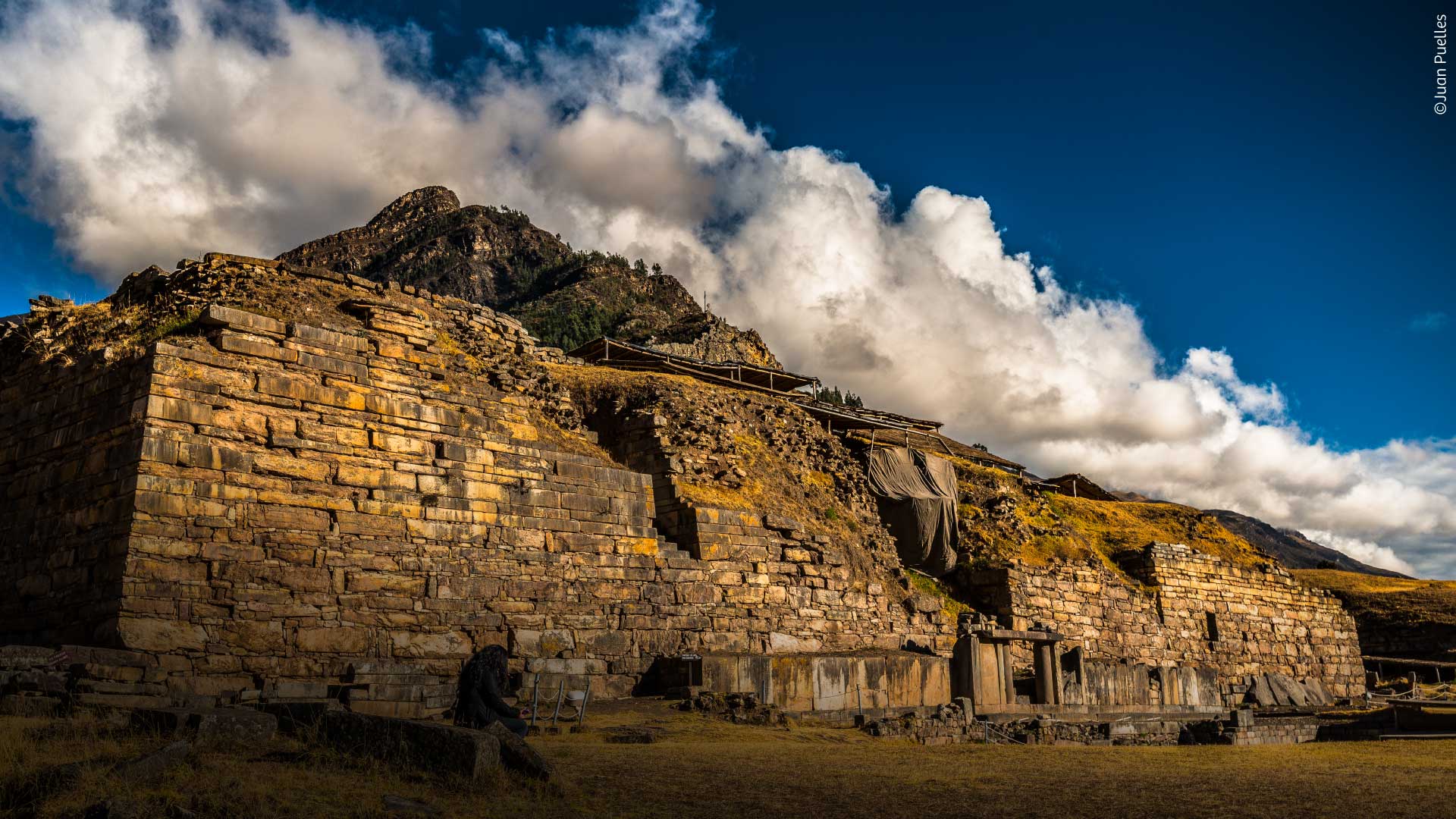
Chavin consists of two main temples built on carved stone terraces. The U-shaped Old Temple surrounds a sunken circular plaza. The New Temple (or El Castillo), more massive, features a superb facade adorned with a frieze of dark and light stone.
2. Network of Underground Galleries (The Labyrinth)
This is the most mysterious part of the site. The underground area beneath the temples is crisscrossed by a complex network of dark, narrow galleries. Designed with a remarkable ventilation system, these galleries were used for initiation rituals. The Chavin architects had also integrated water channels that, under the effect of the current, produced a dull, mystical roar similar to the roar of a jaguar.
3. The Monolithic Lanzón
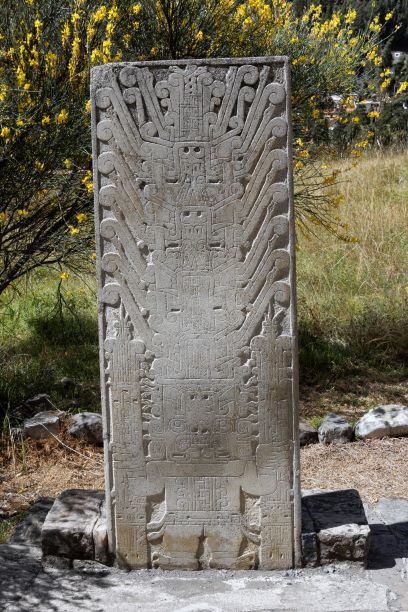
Hidden at the intersection of two dark underground galleries in the Old Temple, the Lanzón is an impressive 4.5-meter-high stone sculpture. Carved in the shape of a lance point, it represents the supreme deity of Chavin. An anthropomorphic figure with feline fangs and hair made of snakes. Seeing it in the very heart of its original sanctuary is a striking experience.
4. The Tenon Heads (Cabezas Clavas)
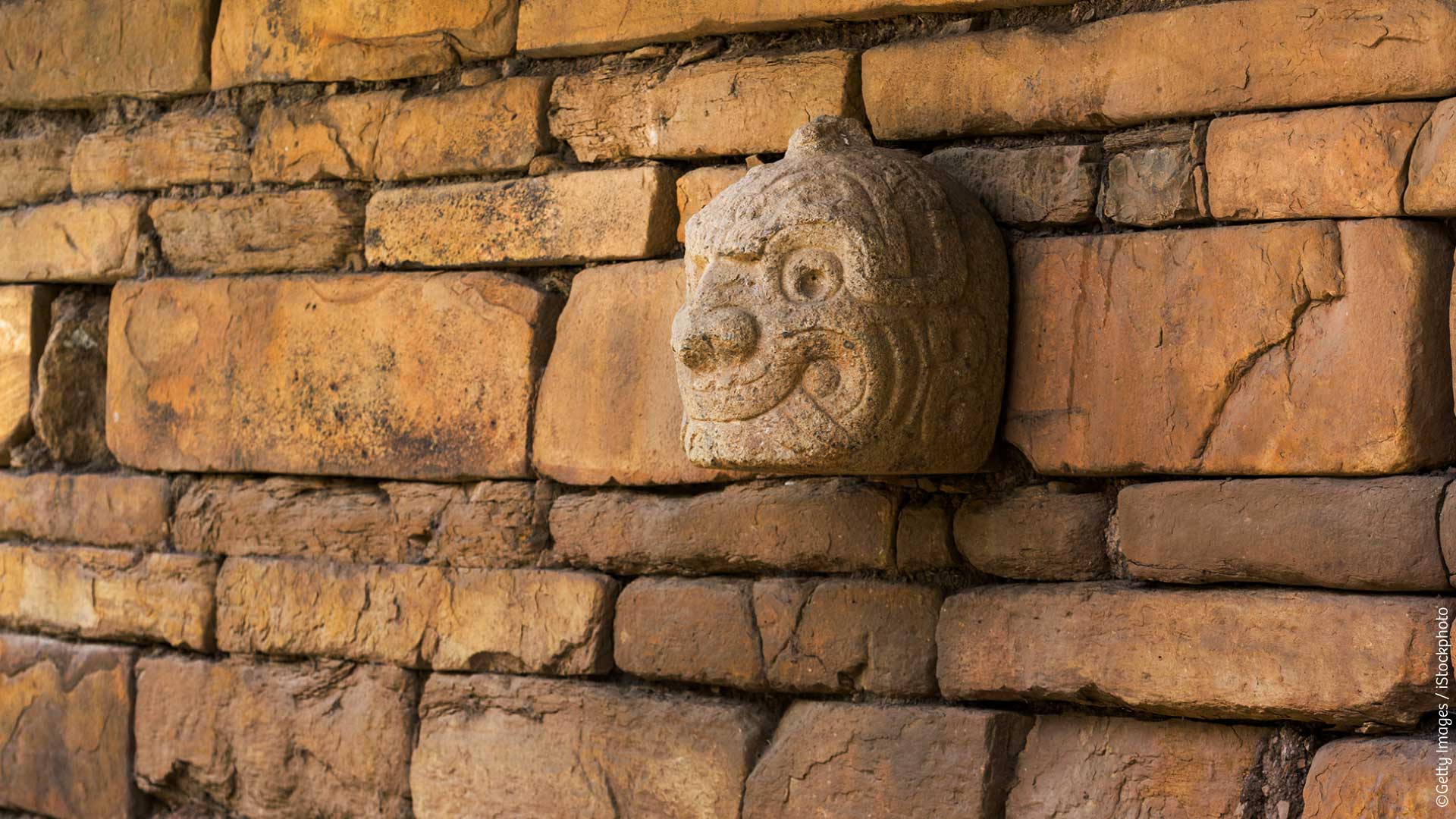
These massive stone sculptures originally decorated the outer facade of the temple. They represent the gradual transformation of priests from a human state to a feline state under the influence of rituals. Today, only one Tenon Head is still visible in situ on the temple wall. To admire the other heads found during archaeological excavations, head to the National Chavin Museum located at the entrance of the village.
How to Get to Chavin de Huantar from Huaraz?
Chavin de Huantar is located on the eastern slope of the Cordillera Blanca (in the area called the Callejón de Conchucos). Getting there is a true visual adventure through spectacular high-mountain landscapes.
Key Route Data:
-
Distance: Approximately 86 km to 110 km depending on the route taken.
-
Travel Time: Count on 3 to 4 hours of road time from Huaraz, due to mountain switchbacks and high-altitude passes.
-
Highest Point: Crossing the mythical Cahuish Tunnel at 4,516 meters above sea level, which marks the natural border between the Callejón de Huaylas and the Callejón de Conchucos.
Transport Options:
-
By Shared Excursion: This is the simplest and most economical option if you are traveling independently. Many agencies in Huaraz offer this day trip.
-
Typical Itinerary: Departure around 8:00 AM/9:00 AM from Huaraz. The journey includes a magical photo stop at the Querococha Lagoon (3,980 m) before crossing the Cahuish Tunnel. After the guided tour of the site and museum, and a lunch break in Chavin, you return to Huaraz around 6:00 PM.
-
-
By Private Vehicle (with Guide): For a more intimate experience at your own pace, we organize your private transfer. This allows you to avoid peak hours at the archaeological site. You can stop whenever you want to contemplate the snow-capped peaks. Plus, you will benefit from the exclusive explanations of one of our expert guides.
-
By Public Transport (Colectivos or Local Buses): For more seasoned travelers, minivans and buses depart daily from the Huaraz terminal heading towards Chavin or Huari. Obviously, it is more economical. On the other hand, this option requires a bit of flexibility on schedules, as journeys can be longer (around 4 hours).
Our Expert Advice for Your Visit
-
Altitude Sickness (Soroche): As the site is located above 3,100 m and the road crosses a pass above 4,500 m, we advise you to spend at least 1 to 2 days acclimatizing in Huaraz before scheduling this visit. Stay well-hydrated and drink a cup of coca tea before departure.
-
What to Bring with You? Bring warm, windproof clothing for crossing the pass, good walking shoes, sunscreen, and a hat. A headlamp will also be very useful for appreciating the carved details in the darkness of the underground galleries!
-
The Museum is a Must! Don’t miss the National Chavin Museum, located a bit further down the valley. This is where the famous original Tenon Heads and the magnificent ceramics found during excavations are kept.
Ready to explore the mysteries of Chavin de Huantar? Contact us to integrate this major cultural stop into your custom itinerary in northern Peru!