
Festivals and rituals in Peru are not just marked dates on a calendar – they are bridges between worlds. Worlds of the living and the ancestors, of nature and the gods, of memory and celebration. As you travel through the Andes or the Amazon rainforest, it’s hard not to stumble upon a procession, a masked ball, a mountaintop ritual, or a large communal meal shared with music.
Some celebrations take place in the intimacy of a small village; others attract crowds from all over the world. But they all have one thing in common: they tell the story of Peru at its deepest level – its spirituality, its Indigenous roots, its cultural blending, its joy for life, and its resilience.
Inti Raymi – The Return of the Sun, Honor of the Andes
Among the great Andean festivals, Inti Raymi, or the “Festival of the Sun”, is perhaps the most iconic. Celebrated every year on June 24 in Cusco, the former Inca capital, it marks the winter solstice in the Southern Hemisphere – the moment when the Sun, Inti, supreme deity of the Inca Empire, begins its triumphant return to the Andean sky.
In Inca times, this ceremony brought together the highest dignitaries of the empire around the Sapa Inca, the emperor, to thank the Sun for granting life on earth and to ask for a fertile year. For several days, the festivities were filled with animal sacrifices, ritual dances, chants, and offerings. The Incas believed that the cosmic balance depended on this gratitude toward Inti, their celestial father.
Today, Inti Raymi reenacts this history on the majestic site of Sacsayhuamán, above Cusco. Actors in traditional costume play the emperor, his court, and the representatives of the four regions of the empire. But beyond the spectacle, the festival still carries deep symbolic meaning for Quechua communities. You can still feel that profound connection to the land, the stars, and the natural rhythms of the world.

Raymi Llaqta – Reclaiming Identity in the Amazonas Region
Further north, in the Amazonas region, another major celebration honors the Andean heritage: the Raymi Llaqta de los Chachapoyas. Literally the “Festival of the People,” it usually takes place in June, in Chachapoyas, the regional capital, and brings together communities from across the different provinces of Amazonas.
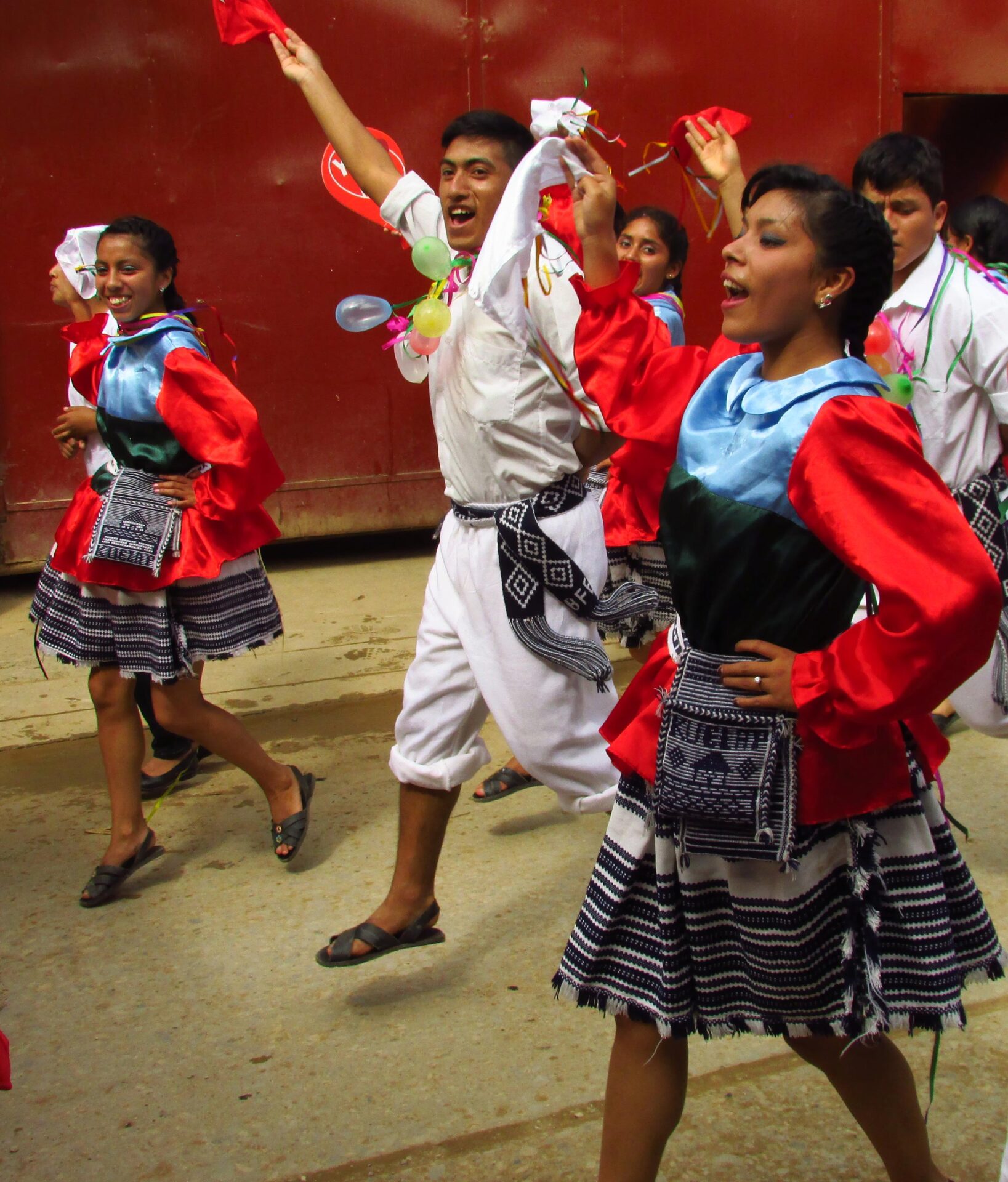
This festival has a dual purpose: to celebrate local cultural identity – especially that of the descendants of the Chachapoya, the mysterious “Cloud People” – and to strengthen the ties between rural communities, many of which are geographically isolated. Each group parades in traditional dress, showcasing their dances, music, culinary specialties, and crafts. It’s an explosion of color, rhythm, and pride.
Raymi Llaqta is also a powerful act of cultural resistance. It reminds us that the northern Andes have their own history, often overlooked in favor of the dominant Inca narratives. With strength and creativity, it affirms that the memory of Andean peoples is still very much alive – and that it’s being passed on today through joy and celebration.

Raqchi – When Rituals Come to the Village
In the small village of Raqchi, south of Cusco – known for its impressive temple dedicated to Wiracocha, the creator god in the Andean worldview – traditions take on a more intimate, yet equally powerful form.
At certain times of the year – especially during agricultural or religious festivals – local residents come together to hold community ceremonies that blend Catholic practices with ancestral Andean rituals. You’ll witness offerings to Pachamama (Mother Earth), circular dances, music played with drums and flutes, and communal meals cooked in traditional earth ovens.
What’s celebrated in Raqchi isn’t just a god or a date on the calendar – it’s the cycle of life, the connection between humans and nature, between elders and children. It’s also a way of keeping traditions alive, passing them down through gesture, word, and shared experience.
San Juan – The Great Festival of the Peruvian Amazon
June 24 is not only the day of Inti Raymi in the Andes – it’s also the day of San Juan, one of the most important festivals in the Peruvian Amazon. Here, the Christian Saint John has been largely reinterpreted by river and forest communities, resulting in a unique blend of popular faith, music, dance, and festive water rituals.
In Amazonian villages, people gather to sing, dance to cumbia and pandilla rhythms, organize contests, light bonfires, and most importantly, immerse themselves in rivers and lagoons for purification. For these communities, water is sacred – it heals, regenerates, and connects to the invisible world.
One dish symbolizes the celebration: the juane, made from rice, egg, olives, and chicken, wrapped in bijao leaves. It reflects regional identity, just like the festival of San Juan itself – a celebration of life, abundance, and community.
The Festival of the Black Virgin Sara in Túcume
If you’re in the Lambayeque region in December, don’t miss one of the most emblematic festivals in northern Peru: the celebration of the Black Virgin Sara in Túcume. It’s a unique experience, where faith, history, and tradition intertwine.
Each year around December 8, the village of Túcume – famous for its impressive complex of adobe pyramids – pays tribute to its patron saint: the Virgin Sara, affectionately called “La Negrita Sara”. This religious figure holds a very special place in the hearts of the locals. Her name, Sara, means “corn” in Quechua – a nod to fertility, the land, and the deeply rooted Andean heritage of the region.
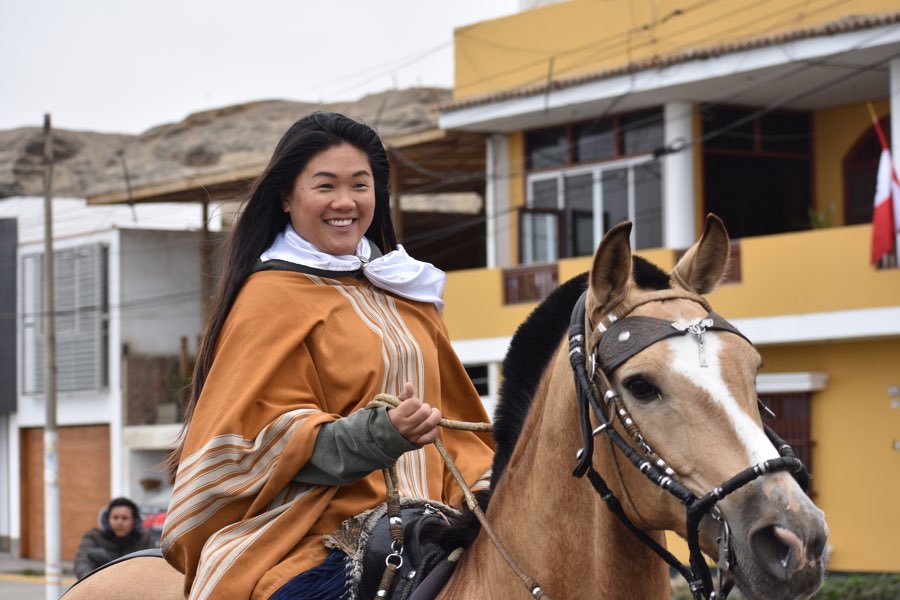
For several days, the village comes alive with vibrant colors, music, and dances. A grand procession winds through the streets, with the statue of the Virgin adorned in flowers and embroidered fabrics. Traditional dances accompany the festivities, along with marching bands and religious hymns. Masses are celebrated, but also joyful gatherings where food, handicrafts, and community life come together.
What makes this festival so moving is the fusion of cultures it represents. You’ll see the Catholic legacy inherited from Spanish colonization, pre-Columbian Andean beliefs tied to the earth and fertility, and influences from Afro-Peruvian traditions. The Black Virgin figure embodies intertwined histories – of Indigenous peoples, African slaves, and the cultural blending that shapes the identity of northern Peru today.
The Cajamarca Carnival – The Festive Soul of the Northern Andes
Between February and March, you can take part in the Carnival of Cajamarca, considered the largest and most vibrant carnival in Peru. For several days, the entire city transforms into a whirlwind of color, music, laughter… and paint!
Unlike the more religious carnivals in other regions, Cajamarca’s Carnival is first and foremost a popular and pagan celebration, marked by incredible creativity and a strong sense of regional identity. The locals, organized into different neighborhood groups known as patrullas and comparsas, compete in designing colorful costumes, hand-decorated floats, and choreography that is as funny as it is spectacular.
During the festivities, expect to be splashed with paint, water, and even talcum powder! It’s all part of the fun, with locals enthusiastically welcoming visitors into their joyful chaos.
But the Carnival of Cajamarca is also a deep-rooted tradition. At its heart stands the character of Ño Carnavalón, a giant, humorous figure who symbolizes the carnival spirit. He is celebrated, mourned, and finally “buried” in a symbolic ritual that speaks of the cycle of life, death, and rebirth.
Andean music, traditional dances, costume contests, and local cuisine (don’t miss the tamales, shambar soup, or chicha de jora) make this festival a perfect expression of Cajamarcan culture. It’s a time of freedom and unity, when generations come together, and joy becomes a true form of resistance against life’s challenges.

Experiencing Festivals, Understanding a Culture
At Phima Voyages, these festivals are far more than tourist events – they are open windows into the soul of Peru. Taking part in them means being invited into the heart of a community. It means learning to see the world differently, to feel time, nature, and life in community through another lens.